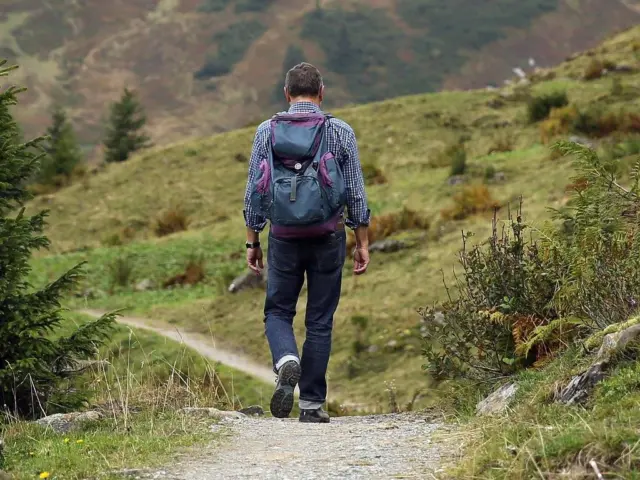
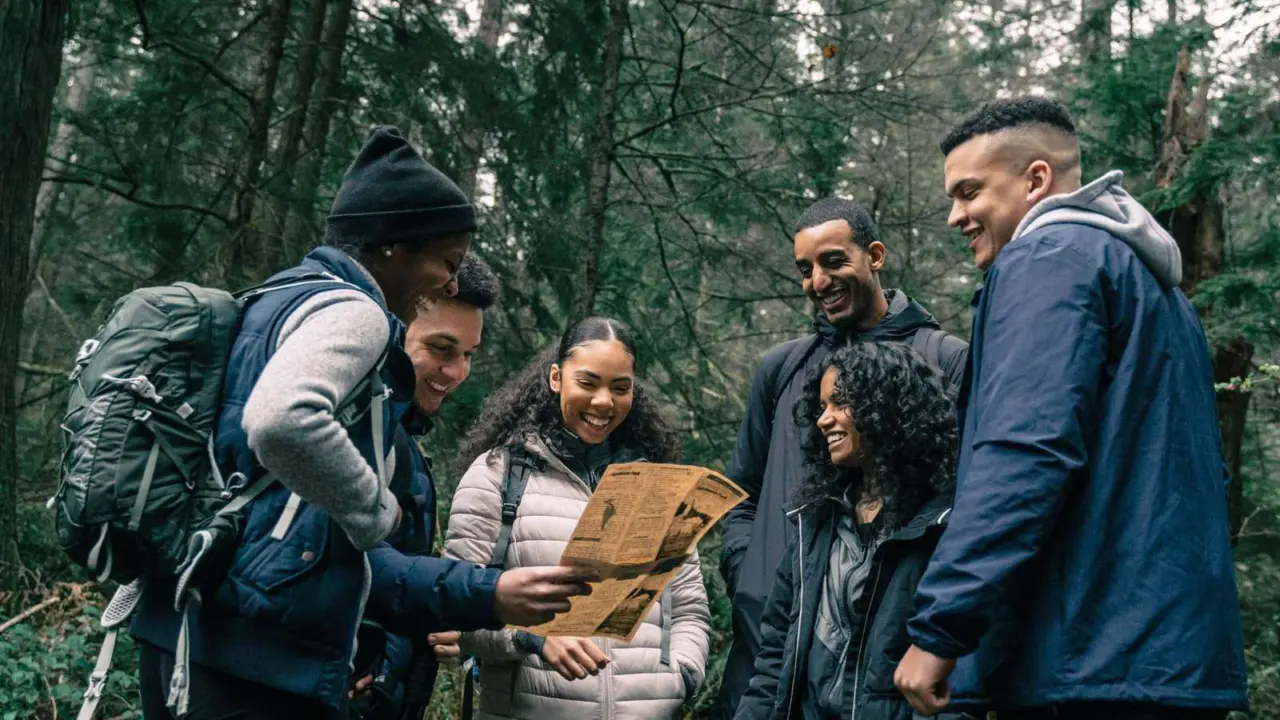
Worried a short hike could go wrong? The best hiking safety tips are simple: pick a trail that fits you, tell someone your plan, and carry the essentials.
Safety is one part of the wider hiking guide, which collects the basics in one place.
| Item | Value |
|---|---|
| Hikers in the U.S. | Roughly 60 million |
| Classic safety checklist | 10 essentials |
| Length of an easy trail | Less than 3 miles |
| Food one checklist suggests carrying | Enough for two days |
| Wilderness first aid course | Can be done in a weekend |
These figures come from Mental Floss and the American Hiking Society. They can change, so check the source before you rely on them.
Plan the hike before you leave the car
Most trail trouble starts before you reach the trailhead. Start by choosing a hike that matches your fitness and experience, not just the best view. Mental Floss says many organizations follow a more-or-less standard formula for rating trail difficulty:
- Easy: mostly level terrain, less than 3 miles in length.
- Moderate: a few inclines and steeper segments, between 3 and 5 miles.
- Moderately strenuous: steady inclines and steep sections, generally 5 to 8 miles.
- Strenuous: steep inclines and possibly significant elevation gain, usually 7 to 10 miles.
- Very strenuous: the toughest trails, which may involve rock scrambles and stream crossings, usually 8 miles or more.
You can usually check a trail’s difficulty on an area or park website, or ask a ranger. Those same resources can give you a heads-up about trail alerts such as closures, fires or inclement weather, but you should still read the weather report yourself.
Next, tell someone where you are going and when you expect to be back. If you get lost, tired or injured, that information can be used to help locate you, according to Mental Floss.
Plan the return trip as carefully as the outward one. Always calculate the time and energy needed to get back, including whether you will have enough daylight and water to complete it.
What the 10 essentials cover
The 10 essentials is a checklist that several hiking organizations publish in slightly different forms. Mental Floss groups the items into these categories:
- Hydration: a water bottle plus filters, UV or chemical treatment.
- Food: high-calorie options such as energy bars and fruit.
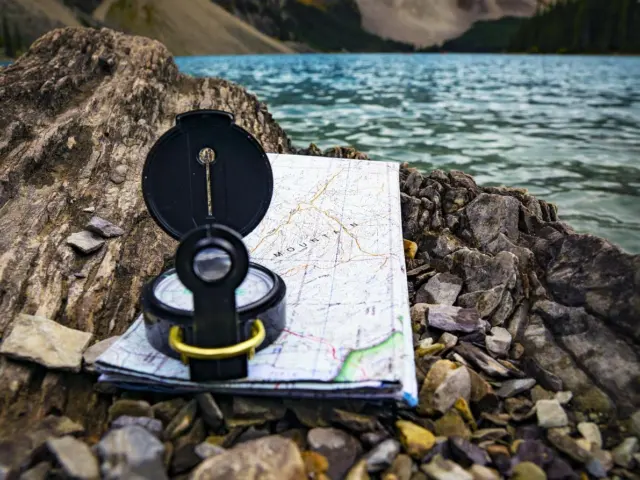
- Navigation: a paper or digital map, a compass, a GPS system and a whistle.
- Sun protection: sunscreen, a cap and sunglasses.
- Light: a flashlight or headlamp with fresh batteries.
- All-weather clothing: a jacket, gloves, a hat and a rain shell.
- Firestarters: waterproof matches or a lighter.
- First aid kit: bandages, disinfecting ointment, and allergy and pain medications.
- Repair kit: duct tape, scissors and a pocket knife.
- Emergency shelter: an ultralight tarp, space blanket or bivy sack.
Treat the list as a starting point. A Ski Utah guide advises adding to it depending on the length, difficulty and climate of your hike, and says local ranger stations are a great resource for extra gear advice.
It is tempting to skip the kit on a short outing. The same guide puts it well: it is best to prepare and not need everything, than to have a simple delay become an emergency.
Weight matters too, because Mental Floss reminds you not to pack too heavy. Our guide on how to choose a daypack can help you carry the kit without overloading yourself.
Navigation that still works when your phone doesn’t
Ski Utah recommends carrying a map and compass, optionally a GPS, and learning to use them rather than depending on a hiking app. Its reason is blunt: cell service isn’t reliable out there.
The American Hiking Society goes a step further. Its advice, on the American Hiking Society site, is to pack two types of navigation and make sure one of them doesn’t need to be charged. Whatever you choose, practice until it is second nature.

The New York-New Jersey Trail Conference makes a similar point: be prepared with both digital and physical navigation tools. A paper map is only useful if you can read it, so the walkthrough on how to read a topographic map is a good place to build that skill before your next trip.
Sun, bugs and bears
Sun protection
Bring sunglasses, a hat and sunscreen of SPF 30+, and consider UV-rated clothing, says Ski Utah. The Trail Conference adds that you should apply sunscreen regularly, even on cloudy days.
Altitude raises the stakes. The American Hiking Society notes that as you go up in elevation the sun’s rays get stronger and stronger, so you can burn faster and worse than at lower elevations.
Bugs and ticks
The American Hiking Society suggests choosing repellents whose active ingredients are CDC-recommended for repelling disease-carrying insects and that are registered with the EPA. Check how many hours of efficacy the product offers and reapply accordingly.
When you get home, check for ticks, as Mental Floss advises after every hike.
Bears
The American Hiking Society says that the vast majority of the time a bear wants to avoid you as much as you want to avoid it. Its advice is to carry bear spray on your person at all times and know how to use it properly, as set out on its hiking safety page. Ask a local ranger whether bear spray makes sense where you are going.
Water, food, clothing and footwear
Carry more water than you think you need. The American Hiking Society advises packing more than enough for your activity plus a way to purify water, and the Trail Conference points out that your body loses fluids more quickly in both hot and cold weather.
For food, one checklist in the Mental Floss piece lists high-calorie options such as energy bars, GORP, candy bars and fruit, enough for two days. A short day hike needs far less, but the point stands: carry more than the plan strictly requires.
Dress in layers and pack a rain jacket, as the Trail Conference recommends. It also says to avoid cotton, which retains moisture and takes longer to dry, and to choose synthetic moisture-wicking fabrics instead.
Your feet need attention as well. Mental Floss warns that sneakers designed for sidewalks usually lack the support and tread for rough terrain, and the Trail Conference says to avoid sandals and open-toed shoes because they leave your feet exposed to rocks and roots.
When something goes wrong
A few habits make a bad situation easier to handle. According to Mental Floss, these are worth building in:
- Hike with a partner or group. If one person gets injured, others can seek help.
- Go slow at unfamiliar altitude. Thinner air makes you tire and dehydrate more easily, so expect to take more frequent breaks.
- Do not rely only on your phone. Many national and state parks have unreliable cell service or none at all, and some hikers carry personal locator beacons.
- Go solo only with extra care. Plan the route carefully, carry a paper map, know how to use a compass, and stick to easier, shorter routes until you gain experience.
The American Hiking Society says signaling devices such as survival whistles and signal mirrors help rescuers find you. It also recommends a headlamp with extra batteries so you are not stuck in the dark.
If you are stranded overnight, ACR Electronics suggests a lightweight emergency blanket or bivy sack for shelter and warmth. The same page tells hikers to stay on marked trails rather than straying off-path.
Finally, pack a first aid kit and know how to use it. The American Hiking Society lists sprained ankles, blisters and cuts as common injuries, and says a wilderness first aid course can be done in a weekend, as noted in its essentials overview.
Frequently asked questions
Do I need the essentials on a short hike?
Show answer
Yes, a lighter version at least. A Ski Utah guide notes that a twisted or broken ankle or a wrong turn can turn a short hike into many hours outside.
Can I rely on my phone for navigation?
Show answer
Not on its own. Ski Utah says cell service isn’t reliable on trails, so carry a map and compass and learn to use them.
Is it safe to hike alone?
Show answer
It can be, with more preparation. Mental Floss advises a carefully planned route, a paper map, a compass and easier, shorter routes until you gain experience. It also suggests a fully-charged battery pack for your phone.
What should I wear on my feet?
Show answer
Choose supportive footwear with good traction. The Trail Conference suggests sturdy hiking boots or athletic shoes with good traction and ankle support, and advises against sandals.
Do I need bear spray?
Show answer
It depends on where you hike, so ask a local ranger. Where bears live, the American Hiking Society recommends carrying it on your person and knowing how to use it.