Choosing between hiking boots vs trail runners? Pick trail runners if you carry a light pack on gentle trails with strong ankles; pick boots for heavy loads, rough ground or ankles that roll easily.
For the wider picture on gear and planning, see the hiking guide.
| Item | Value |
|---|---|
| Trail runner weight (per pair) | 18 to 24 ounces |
| Trail runner price | $100 to $150 |
| Midweight hiking boot weight (per pair) | 2 to 3 pounds (up to 4 pounds for heavy-duty styles) |
| Midweight hiking boot price | $150 to $250 |
| Trail runner lifespan | A single season of regular use |
| Pack weight where boots pay off | 30 pounds or more |
The figures come from the Appalachian Mountain Club and Better Trail. They can change, and the AMC page carries a 2024 copyright, so check the source before you rely on them, especially prices.
What really separates boots from trail runners
The Appalachian Mountain Club says hiking footwear has two primary tasks: give adequate ankle support to prevent sprains and injury, and protect your feet from the environment. How much of each you need depends on the terrain, your pack weight and how stable your ankles are.
A trail runner is essentially a beefier running shoe, cut below the ankle, with grippy tread and extra resistance to twisting. Hiking boots have a high ankle collar and come in everything from very flexible to extremely stiff.
A head-to-head wear test by Outside sums up the trade in one line: trail running shoes are lighter and more flexible, while hiking boots are more supportive and protective.
- Trail runners: lighter, softer underfoot, low cut, usually quick to get comfortable.
- Hiking boots: heavier, stiffer, higher cuff, tougher rubber and uppers.
- Either type: a waterproof membrane adds weather protection, but it comes at the expense of ventilation.
Weight and fatigue
By the AMC’s numbers, most trail runners weigh 18 to 24 ounces per pair. A typical midweight boot sits in the 2- to 3-pound range, and heavy-duty styles reach 4 pounds.
One Outdoor Life comparison of a specific boot and a specific trail runner found a difference of 1 pound 7.6 ounces, or 11.8 ounces per foot. That sounds small, but you lift each foot with every step.
The AMC states that hiking requires less effort in lightweight footwear, which is the main pull of trail runners.
Lighter is not automatically better in a boot, though. Better Trail warns that featherweight mid-cut models offer far less support, protection and durability than heavier competitors.
Ankle support and foot protection
When it comes to support, the AMC says the most important factor is torsional rigidity: a stiffer shoe gives a more stable platform underfoot. A higher collar helps too, but it is secondary, and your foot should not slip from side to side inside the shoe. You can check stiffness yourself by holding the toe in one hand and the heel in the other and twisting, as the AMC describes.
A tall upper is not a sprain guard on its own. Outdoor Life says the upper protects your ankles from scuffs and scratches but will not stop you rolling your ankle, and that the close fit of a boot does more than the height of the cuff.
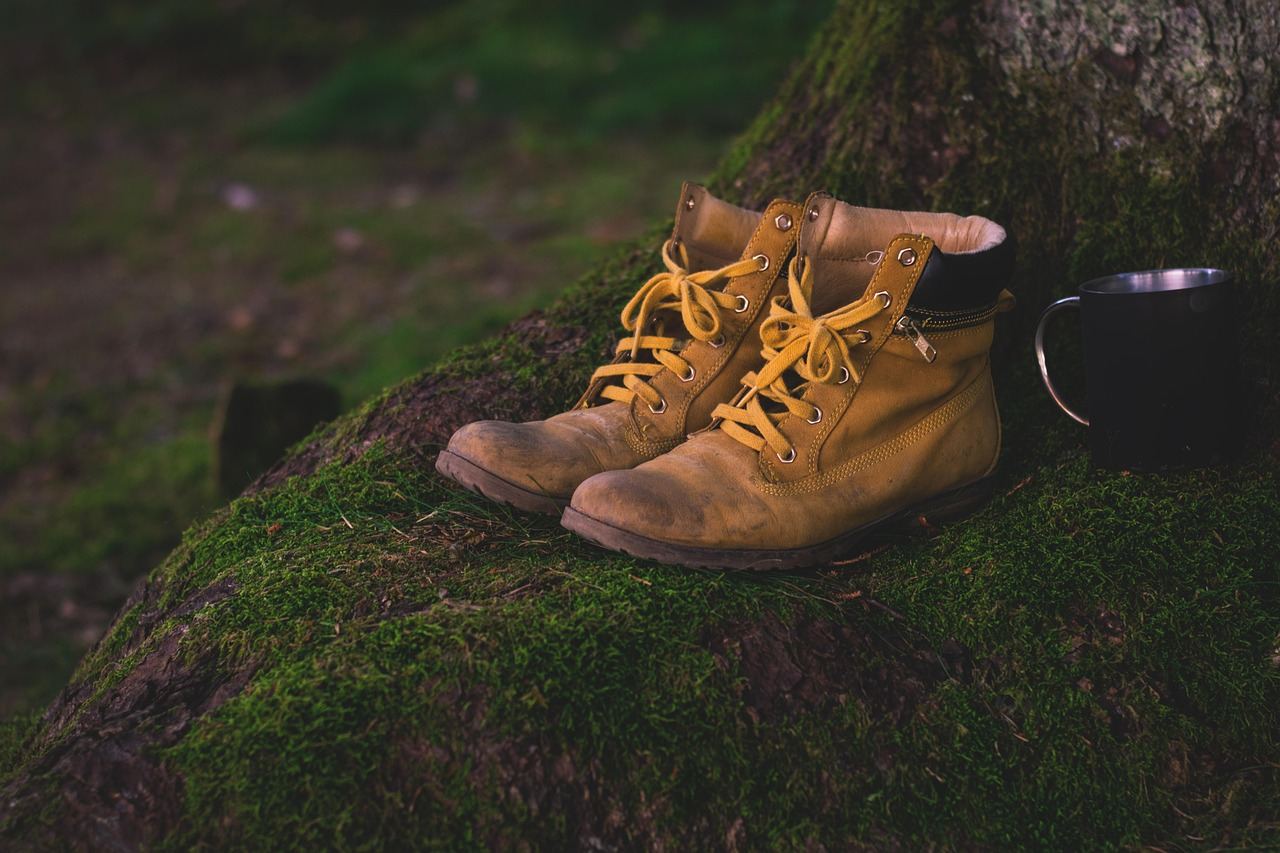
Protection is a separate question from support. The AMC says low-cut trail runners expose your ankles to the environment, and gaiters can help but only a full ankle collar maximizes protection. Terrain where that matters:
- Rocky ground, where sharp edges meet bare ankles.
- Bushwhacking through dense brush.
- Ankle-deep mud puddles.
- Scree and talus, where a softer sole can bruise the undersides of your feet.
Soft cushioning has its own catch. According to Outdoor Life, some especially cushioned trail runners can result in more ankle twists because of a stilt-like effect from the thick sole.
Load matters as well. Heavier packs put extra pressure on your ankles, which raises the value of proper support, and Better Trail recommends boots mainly for people who regularly carry 30 pounds or more.
Fit, comfort and break-in
Outdoor Life notes that the soft, flexible materials in trail runners typically mean no break-in time at all. Boots, by contrast, need to be worn in short spurts for several weeks so the material softens.
Fit decides most blister stories. The same source argues it is quite tough to find a great fit in hiking boots, and that blisters in trail runners usually point to a bad fit rather than materials that need softening.
Traction is less clear-cut. One Outdoor Life writer found boots typically have excellent traction across the board while trail runners are more of a mixed bag, so check the outsole on any model you consider.
Whatever you pick, Better Trail advises that you always try on the boot or shoe before you hit the trail.
Cost and durability over time
The sticker prices favor trail runners. The AMC puts trail runners at $100 to $150 and midweight boots at roughly $150 to $250, with all-leather boots at the upper end.
The picture reverses over time. The AMC says most trail runners last only a single season of regular use, while a good pair of boots with a durable all-leather upper can last for years, so the long-term expense of boots is much, much less.
That is a rule of thumb, not a law. Better Trail points out that it is not hard-and-fast that boots are more durable than shoes, because many makers sell a low-cut version built the same way as the boot.
Which should you choose?
The AMC says boots can be overkill on gentle to moderate terrain with a light pack and strong, injury-free ankles, where a trail runner is generally a safe choice. Use that as your starting point and adjust for your own situation.
Trail runners suit you when:
- The trail is gentle to moderate and well maintained.
- Your pack is light.
- Your ankles are strong and you have no history of sprains.
- You value low weight and quick comfort over armor.
Boots suit you when:
- The ground is rough, uneven or rocky.
- You carry a heavy pack.
- Your ankles are flexible, with a history of twists and sprains.
- You want protection from brush, mud and sharp rock.
The Outside tester preferred the trail running shoe far more than the boot on relatively mild trails, yet still concluded that there is a time and place for heavier, more protective boots, and that anyone with foot or ankle injuries would likely benefit from them.
Footwear is only one layer of your kit, so the guide on what to wear hiking shows how it fits with the rest of your clothing. If you are still deciding what goes on your back, this guide on how to choose a daypack covers the load side of the question.
Frequently asked questions
Are trail runners safe for hiking?
Show answer
For gentle to moderate terrain, a light pack and strong, injury-free ankles, the AMC says a trail runner is generally a safe choice. On rough ground, with a heavy pack or with ankles that have a history of sprains, boots are the stronger option.
Do hiking boots prevent rolled ankles?
Show answer
Not on their own. Outdoor Life says a tall upper guards against scuffs and scratches but will not stop a roll, and that the close fit of the boot does more of the work.
Do trail runners wear out faster than boots?
Show answer
Usually. The AMC says most trail runners last only a single season of regular use, while good boots with a durable all-leather upper can last for years.
Do I need to break in my footwear?
Show answer
According to Outdoor Life, trail runners typically need no break-in time, while boots should be worn in short spurts for several weeks first.