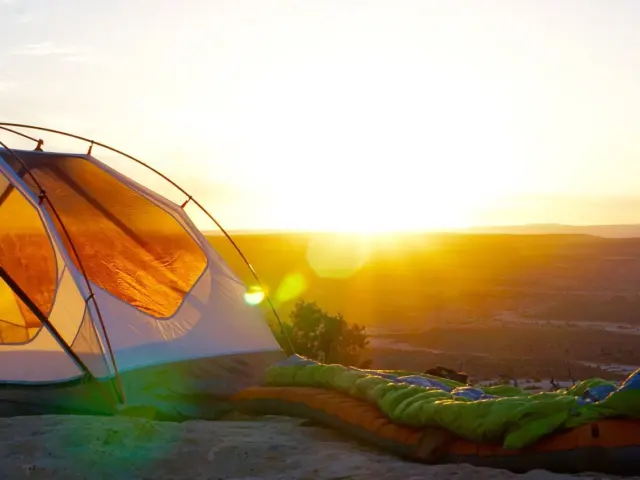
Tired, hungry and unsure where to pitch? Knowing how to pick a campsite comes down to a quick look overhead, a check of the slope, and 200 feet of distance from water and trail.
This page is a spoke of the camping guide, which covers the wider topic of camping.
| Item | Value |
|---|---|
| Distance from water to your camp | 200 feet |
| Distance from the trail to your camp | 200 feet |
| Winter distance off trail | More than 200 feet |
| Cathole depth for solid human waste | 6 to 8 inches |
| Distance from water to scatter strained dishwater | 200 feet |
| Number of Leave No Trace principles | Seven |
These figures come from the Appalachian Mountain Club and Outdoor Life. Distances and local rules can change, so check the source and the land manager before you rely on them.
Look around before you unpack
The American Hiking Society suggests you check your surroundings before you remove anything from your backpack. Its campsite guide asks you to look up and down, left and right, at where the tent or cooking area might go.
A slow scan takes a minute and can save a bad night. Ask yourself questions like these:
- Could a dead branch crash down on the tent during a gusty night?
- Is that mound of dirt actually an ant pile?
- Is the spot a bed of flowers or other living plants?
- Will the spot collect water if it rains?
If any answer worries you, walk on and look again. A better pitch is usually a few steps away.
Think like a raindrop and a gust of wind
The same guide tells you to be ready for adverse weather no matter what the forecast says. Its advice is not to put your sleeping bag in the middle of a valley or at the bottom of a hill, where a rainy night will leave you and your gear soaked (American Hiking Society).
In canyon country, be especially alert, because flash floods may occur without warning. That is a strong reason to pitch above the lowest ground rather than in it.
Wind is the other half of the picture. Large boulders in some parts of the country, or bushes in others, can stop strong winds from ripping through your campsite.
How to pick a campsite surface that lasts
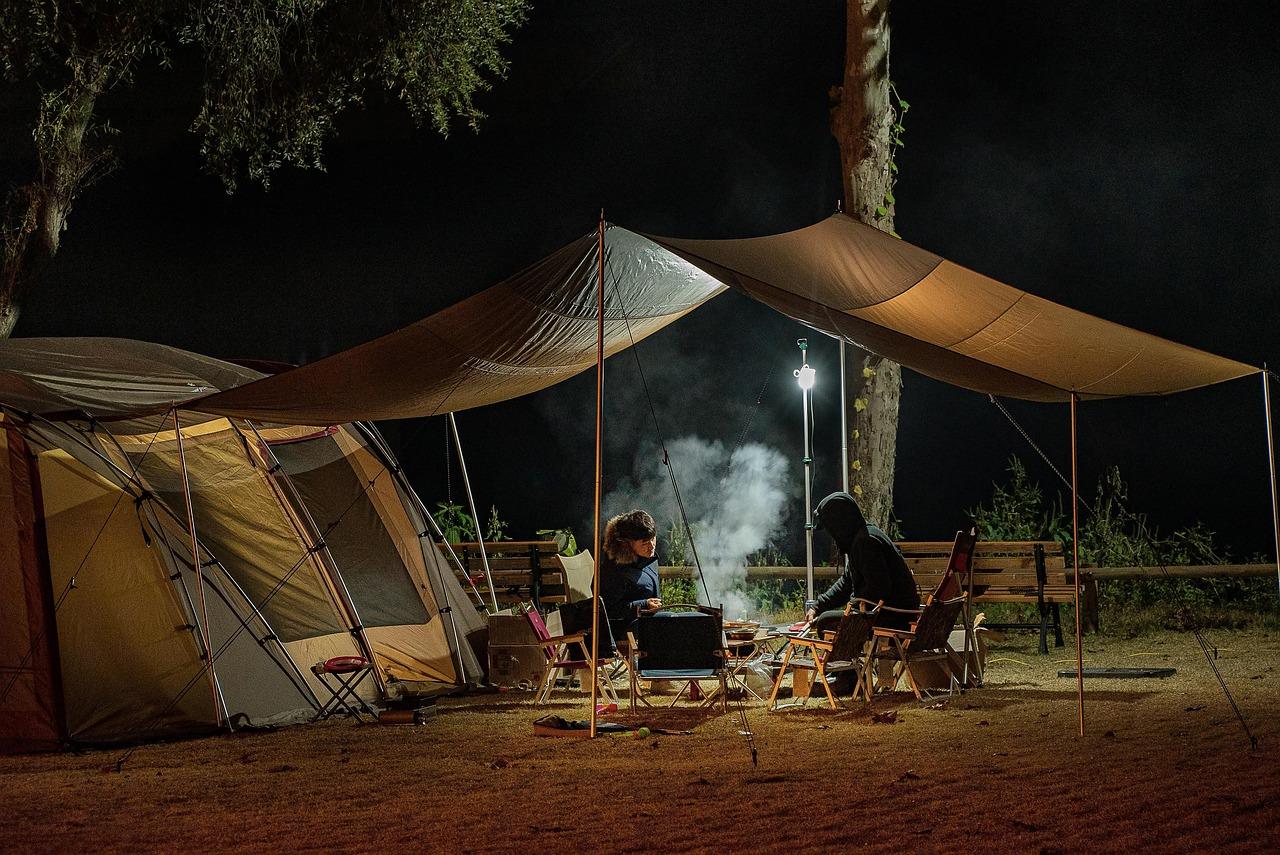
Outdoor Life’s explainer says durable surfaces include established trails, campsites, rock, gravel, and dry grasses or snow (Outdoor Life). It lists “Travel and Camp on Durable Surfaces” among the seven Leave No Trace principles.
The American Hiking Society puts it simply: think like a plant. A bed of flowers may look comfortable, but a tent on top of it will smother them, so it suggests dead leaves or pine needles instead (American Hiking Society).
Good campsites are found, not made, according to Outdoor Life, and altering a site is not necessary. The Appalachian Mountain Club adds that you should build camp somewhere that needs no modifications, such as cutting down branches or removing plants, to fit the tent, cooking area, and bear hang or canister (Appalachian Mountain Club).
In popular areas, Outdoor Life advises you to keep campsites small and to focus activity where vegetation is already absent. If a site has been used often, the American Hiking Society says to reuse the areas that have already been slept on, which limits the environmental impact.
How far from water and the trail should you camp?
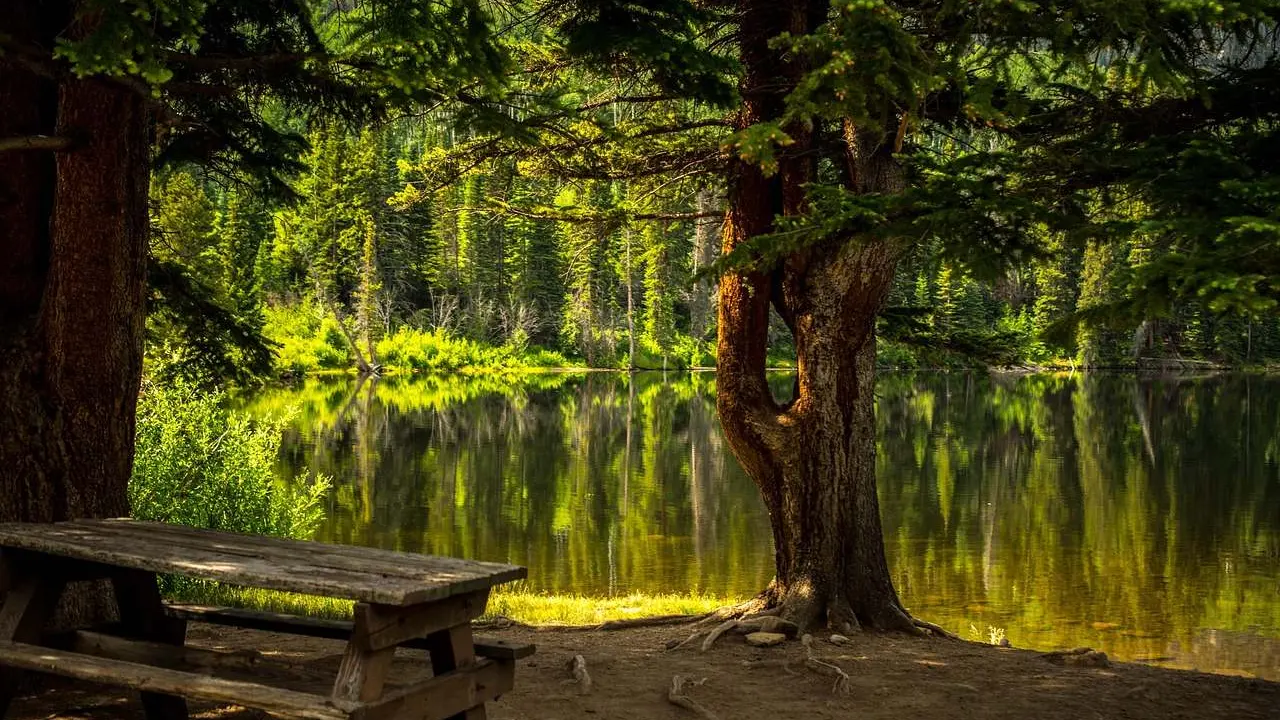
The Appalachian Mountain Club says to set up your site 200 feet away from any water source and 200 feet away from the trail. Outdoor Life gives the same distance from lakes and streams, to protect riparian areas.
Water still has to be reachable. The American Hiking Society points out that a site a half mile from water means a lot of wasted effort cooking and filling bottles. The flip side is that you should go 200 feet from any water source to relieve yourself, so it recommends finding a sensible middle ground.
Distance from water also shapes how you handle waste at camp:
- Dig catholes for solid human waste 6 to 8 inches deep, at least 200 feet from water, camp and trails (Outdoor Life).
- Scatter strained dishwater into the soil at least 200 feet from a natural water source (Outdoor Life).
- Do not wash dishes in a lake or stream, because biodegradable soap needs soil to break down (Outdoor Life).
Winter changes the math. With no leaf cover, the Appalachian Mountain Club says visitors need to travel more than 200 feet off trail so the site is not seen from it.
Plan ahead: rules, crowds and gear
Before you travel, the Appalachian Mountain Club says to research the area and learn the rules. Its Leave No Trace programs manager recommends designated campgrounds or backcountry tent sites over off-trail camping, even when off-trail camping is allowed.
Outdoor Life also tells you to know the regulations and special concerns of the area and to schedule your trip to avoid times of high use. In busier places, the American Hiking Society asks you to leave a little space from other campers as a buffer zone and to camp away from trails.
Your site and your shelter work together, so it helps to read about how to choose a tent before you head out. Matching your bag to the night ahead matters too, and sleeping bag temperature ratings explain what the numbers on the label mean.
Leave the site as you found it
The Appalachian Mountain Club’s guidance for low-impact sites is to pack up your gear, naturalize the area with leaf litter and branches, and return to the trail by a different route. The aim is that there is no sign you were ever there.
Before you go, Outdoor Life says to inspect your campsite and rest areas for trash or spilled food and to pack out all trash, leftover food and litter. Food waste left near a campsite can attract bears, which may then be relocated or killed.
Frequently asked questions
How far should a tent be from a lake or stream?
Show answer
Both the Appalachian Mountain Club and Outdoor Life give 200 feet as the distance from water. The Appalachian Mountain Club also gives 200 feet from the trail.
Is it fine to pitch on a bed of flowers?
Show answer
No. The American Hiking Society says a tent on flowers will smother them and spoil the site for the next visitors, and it suggests dead leaves or pine needles instead.
Should you use a designated site or camp off-trail?
Show answer
The Appalachian Mountain Club’s Leave No Trace programs manager recommends designated campgrounds or backcountry tent sites, even where off-trail camping is permitted. Check the rules for your area first.
Is low, flat ground a good place to sleep?
Show answer
Not always. The American Hiking Society warns against the middle of a valley or the bottom of a hill, where rain can leave you and your gear soaked, and it notes that flash floods can strike canyon country without warning.
What if the site has been used before?
Show answer
Reuse the areas that have already been slept on, says the American Hiking Society. Outdoor Life likewise advises concentrating use on existing campsites in popular areas.