Worried a night by the fire could turn into a wildfire? Here is how to build a campfire safely: check the rules, clear the ground, keep the fire small, and drown, stir and feel the ashes before you leave.
If you are planning the whole trip, start with the camping guide for the bigger picture.
| Item | Value |
|---|---|
| Distance from tents, vegetation and low-hanging branches | At least 15 feet |
| Cleared area around the fire site | At least a 10-foot diameter |
| Depth of a pit you dig yourself | About 1 foot |
| Kindling thickness | Smaller than 1 inch |
| Overhead clearance | At least 3 times the height of the flames |
These figures come from the Smokey Bear campfire guide and the Recreation.gov campfire tips. Distances and local rules can change, so check the source before you rely on them.
Check the rules and conditions first
Before you gather a single stick, find out whether a fire is allowed at all. The National Park Service says each park has its own rules on where and when you can have a campfire, so ask at the visitor center or contact the park before you visit.
Then look at the weather. Smokey Bear advises against building a campfire in hazardous, dry or windy conditions, and Popular Science notes that wind can carry hot embers up to a mile in windy conditions. Some bans are permanent, while others are only a seasonal burn ban during times of drought.
Before you leave home, check these four things:
- Fire restrictions or burn bans for your exact location
- Whether fires are limited to designated rings or pits
- How dry and windy it has been lately
- Any limits on the size or type of fire
Choose the spot and prepare the pit
Start with an existing fire pit that has a metal ring or rock circle, if the site has one, as the Smokey Bear guide advises. Otherwise pick a flat, open area away from gusty spots, and stay at least 15 feet from tents, vegetation and low-hanging branches. Keep vertical clearance of at least 3 times the height of the flames.
Clear at least a 10-foot diameter around the site, whether you use an existing pit or make your own, according to the same Smokey Bear guide. If there is no pit and local rules let you dig one, dig down about 1 foot deep and circle it with a metal fire ring or rocks.
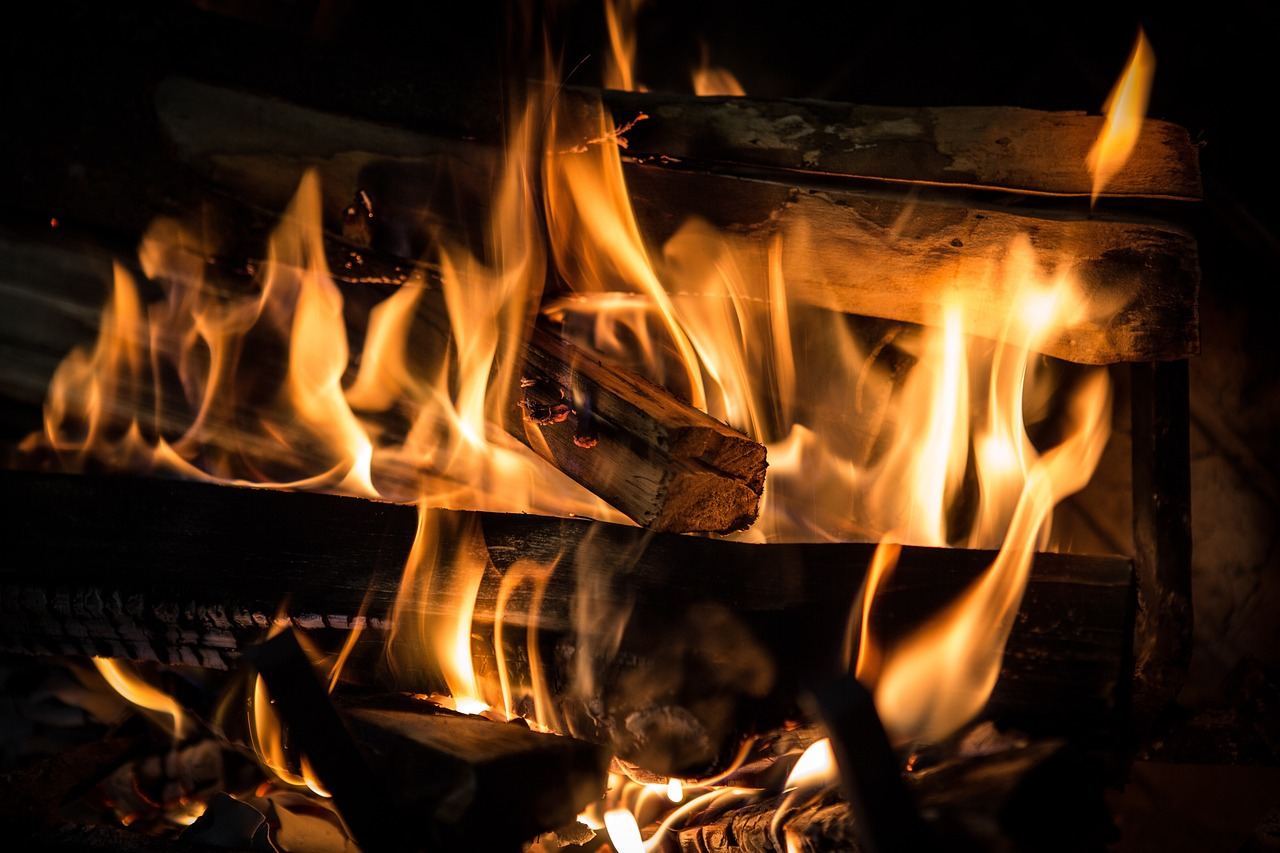
The Recreation.gov tips add that the fire should sit downwind of your tent and gear and be protected from wind gusts.
Once the ground is ready, set up like this:
- Put water, a bucket or large container, and a shovel within reach before you light anything.
- Look up and make sure no branches hang over the pit.
- Move tents, packs and other gear back from the ring.
- Keep spare firewood stacked upwind of the fire so a sudden breeze cannot light it.
Gather wood and build the fire
Buy firewood near the campground if you can. The NPS warns that wood from far away can carry pests, and Popular Science names the emerald ash borer as one invasive species this can spread. If collecting is allowed, take only dead, downed wood no larger than your wrist and never cut whole trees or branches.
You can test whether a stick is dry by bending it. If it bends without breaking it is likely too green, but if it snaps easily it is ready to burn.
The Recreation.gov tips recommend three types of wood:
- Tinder: small twigs, dry leaves or grass that get the fire started
- Kindling: twigs smaller than 1 inch around that light the bigger pieces
- Fuel: large pieces of wood that give lasting heat and flame
Fire needs air, so do not pack the wood into a dense pile. For cooking, the Smokey Bear guide suggests a teepee, with kindling leaned over the tinder like a tent. For a longer-lasting fire it suggests a log cabin, with kindling stacked at right angles around the tinder.
Light the tinder with a match or lighter, and skip flammable liquids. Smokey Bear says never to use them, and the NPS warns never to use gasoline because it can be very dangerous to you and the people around you.
Keep the fire safe while it burns
Keep the fire small so it stays under control, and add wood slowly. Never leave a campfire unattended, and always keep water nearby, as the NPS advises. Watch children and pets closely around the ring.
Burn only wood. The Smokey Bear guide says never to burn trash or dangerous things such as aerosols, pressurized containers, batteries, glass or aluminum. Popular Science adds that burning items like cigarette butts, candy wrappers and plasticware sends toxins such as cadmium, lead and mercury into the air.
A few habits help everyone stay comfortable and safe:
- Remember that synthetic clothing melts when it gets hot, so keep sparks off your jacket.
- Use cooking tools long enough to keep a safe distance, ideally with insulated handles.
- Do not throw bottles or cans into the fire.
Cooking over the coals is part of the fun, and the easy camping meals page has ideas that need little fuss. If cold nights are your reason for a big fire, read up on sleeping bag temperature ratings first, because the right bag lets you keep the flames small.
If the fire jumps outside the pit, call 911, as both the Smokey Bear guide and the NPS advise. With no cell service, contact the nearest park ranger or campground host.
How do you put out a campfire completely?
The rule to remember is simple: if your campfire is too hot to touch, it is too hot to leave. If possible, let the fire burn down to ashes first. The NPS warns that whitish or gray coals can hold heat for hours and flare up if the wind gusts.
Follow the drown, stir, drown and feel method from Smokey Bear:
- Drown: pour lots of water on the fire until the hissing stops, soaking all the embers, not just the red ones.
- Stir: use your shovel to mix the water into the embers and ash, and scrape sticks and logs until no embers are exposed or smoldering.
- Drown again: keep adding water until everything is cool.
- Feel: hover the back of your hand over the ashes to check that the embers are cool.
Smokey Bear says not to put out a fire with just dirt or sand. The NPS accepts sand and dirt only in a pinch, and then you should spread the coals and keep stirring the dirt through them rather than kicking it on top.
Popular Science tells of a group that doused its fire with several bottles of water and went to bed. About an hour later, a campground host found a small blaze among the hot coals. Go slowly, and do not trust a fire that merely looks out.
Frequently asked questions
How far should a campfire be from my tent?
Show answer
Smokey Bear advises at least 15 feet from tents, vegetation and low-hanging branches. Place the fire downwind of your tent as well, and check whether the campground sets a stricter rule.
Can I burn trash or leftover food packaging?
Show answer
No. Burn only wood. Aerosols, pressurized containers, batteries, glass and aluminum are dangerous in a fire, and burning plastics can create toxic gases, as the NPS warns.
Is it enough to cover the fire with dirt or sand?
Show answer
Not by itself. Smokey Bear says to use plenty of water, and the NPS says dirt can insulate coals and keep them hot longer if you simply kick it on top. Stir water, dirt and ash together until everything is cool to the touch.
What should I do if the fire gets out of control?
Show answer
Note your location and call 911. If you have no cell service, contact the nearest park ranger or campground host, as the NPS advises.