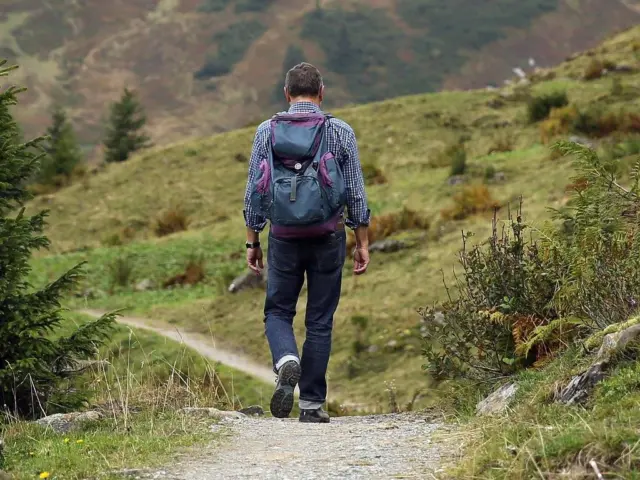
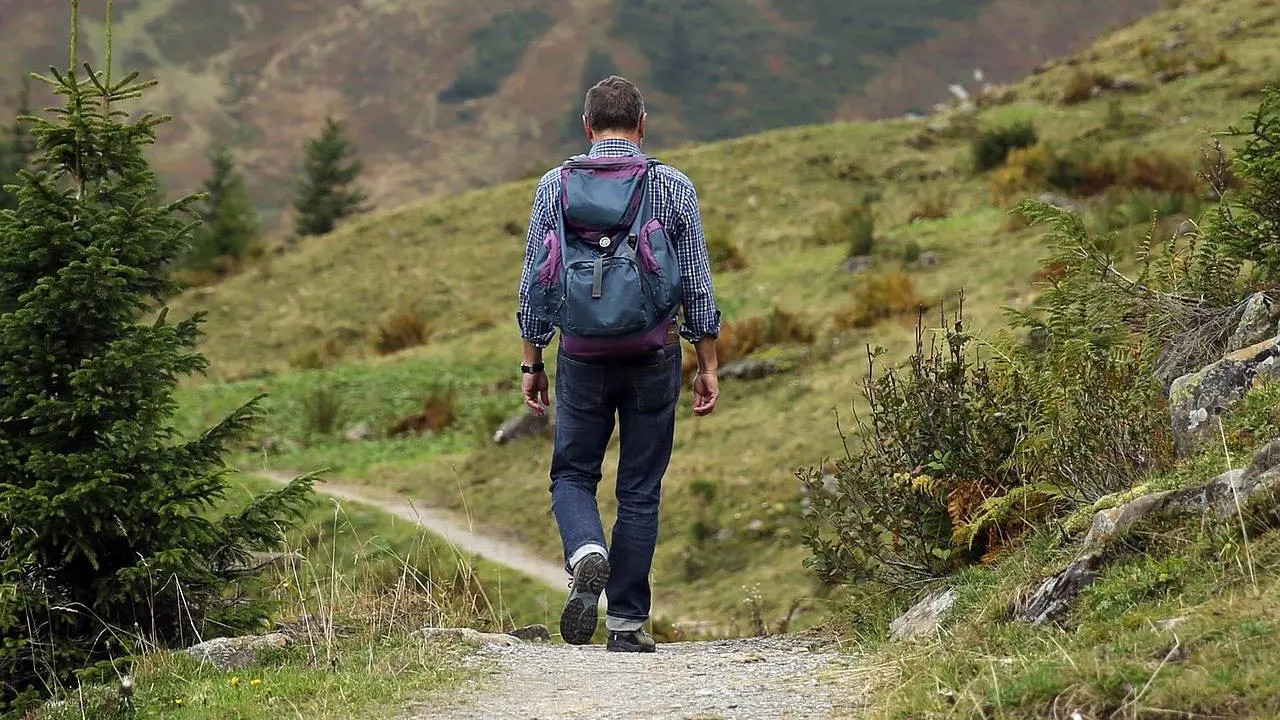
Worried you’re not fit or equipped enough? Hiking for beginners is simple: pick an easy local trail of six miles or less, wear comfortable shoes, carry water and tell someone your plan.
Once you have the basics, the hiking guide on this site shows where to go next.
| Item | Beginner starting point |
|---|---|
| Starter trail length | Six miles or less |
| Flat-trail walking pace | About two miles an hour |
| Water on the trail | 1 liter per person for every two and a half hours of hiking |
| Extra time for climbing | At least 30 minutes for every 1000 feet climbed |
| Weekly mileage build-up | About 10% more per week |
These figures come from the Treeline Review beginner’s guide and HikingGuy. They are rules of thumb and can change, so check the source before you rely on them.
Choose a first trail that fits you
Start local and easy. The Treeline Review suggests a trail of six miles or less with little or no elevation gain, and says a physically fit person can generally walk a flat trail at about two miles an hour (source). It also recommends a trail with cell phone signal, because service is less likely on backcountry routes.
Trail ratings help you judge a route before you go. Many organizations use a rough length-based scale, as Mental Floss summarizes:
- Easy: mostly level terrain, less than 3 miles in length.
- Moderate: a few inclines and steeper segments, between 3 and 5 miles long.
- Moderately strenuous: steady inclines and steep sections, generally 5 to 8 miles.
Distance is only half the story, because elevation gain is the factor beginners miss. HikingGuy points out that a 6-mile hike with 3,000 ft of gain is harder than a 12-mile flat walk, and suggests adding at least 30 minutes for every 1000 feet you climb.
Favor popular trails at first. The same source advises sticking to well-trafficked trails, since other hikers can help if you get lost or need help. Bringing a buddy adds safety and good company, and Lost with Lydia adds that paces differ, so be patient with each other.
Build fitness without overdoing it
You do not need to be in the best shape of your life to begin, according to Lost with Lydia. You are also in good company: Mental Floss, in August 2025, cited the Outdoor Industry Association’s estimate of roughly 60 million hikers in the U.S. (source).
The simplest plan is gradual progress. HikingGuy recommends starting at a distance you can comfortably walk now and adding about 10% of mileage per week until you reach your target (source). Its rough guide for an easy hike, under 5 miles and under 1,000 ft of gain, is a single question: can you walk 3 miles comfortably?
Two cautions from Mental Floss are worth keeping in mind. Tell your physician your plans to make sure there is no medical reason to put hiking off. And go slowly at unfamiliar altitudes, because thinner air makes you tired and dehydrated more easily.
What to wear and carry on a first hike
Good news for your budget: you can use what you already own. The Treeline Review says beginners do not need the latest and greatest equipment and recommends doing a few hikes to learn what you need before buying anything (source). Any backpack works for a day hike.
Clothing is where small choices matter most. Dress in layers, check the weather before you leave, and try to avoid cotton, which loses its warmth once wet and takes a long time to dry. Our guide on what to wear hiking goes deeper on fabrics and layering.
Match your footwear to the terrain. Mental Floss warns that sneakers made for sidewalks usually lack the support and tread that rough ground demands. On gentle, well-kept paths, comfortable everyday shoes can do the job while you decide what to buy.
Water deserves extra thought. Lost with Lydia suggests a half liter of water per hour of activity, and more if it is hot or the trail is hard. The Treeline Review gives a slightly lighter rule of 1 liter per person for every two and a half hours, so carry more than you think you need.
Mental Floss groups the 10 essentials into these categories:
- Hydration, including a way to treat water
- Food, such as energy bars or fruit
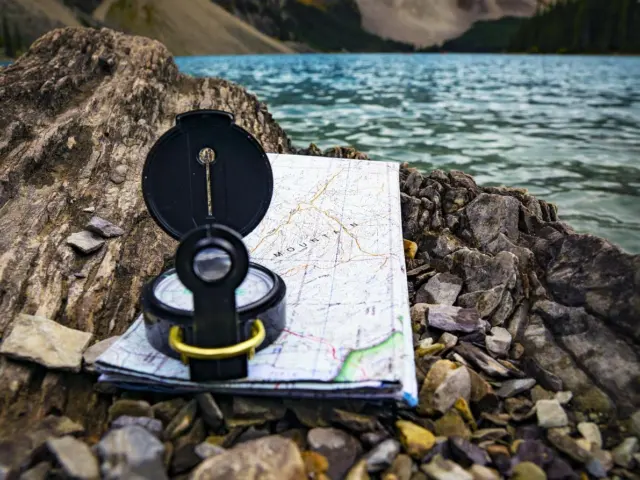
- Navigation: a map, compass or GPS, and a whistle
- Sun protection: sunscreen, cap and sunglasses
- Light: a flashlight or headlamp with fresh batteries
- All-weather clothing: jacket, gloves, hat and rain shell
- Firestarters, such as waterproof matches or a lighter
- A first aid kit
- A repair kit, such as duct tape, scissors and a pocket knife
- Emergency shelter, such as a space blanket
Do not let perfection stop you. Lost with Lydia notes that a couple of the items might not be as necessary on a short hike with many people around, though you should still carry the core ones.
Plan your route and your way back
Most beginner mistakes happen before the trailhead. Work through this short routine:
- Tell a friend or family member where you are going and when you expect to return, so searchers have something to work with if you get lost, tired or injured.
- Download offline maps before you arrive, and carry a paper map as a backup in case your phone dies.
- Pack a backup battery and cord for your phone.
- Calculate the time and energy needed for the trip back, including whether you have enough daylight and water.
Do not lean on your phone alone. Mental Floss notes that many national and state parks have unreliable cell service or none at all. If you do get lost, stay calm, avoid wandering further, and use landmarks, a map or a compass to get back to the trail.
Leave no trace basics for new hikers
Good trail manners are part of hiking from day one. The Treeline Review points to the Seven Principles of Leave No Trace and says the first three matter most when you are starting: plan ahead and prepare, travel and camp on durable surfaces, and dispose of waste properly. Our overview of the leave no trace principles covers all seven.
In practice, Lost with Lydia sums up leaving no trace as:
- Staying on the trail
- Packing out and properly disposing of all waste
- Keeping your distance from wildlife
- Not taking anything that you find
Frequently asked questions
How far should my first hike be?
Show answer
The Treeline Review suggests an easy local trail of six miles or less with little or no elevation gain. If that feels like a lot, trails rated easy are mostly level and under 3 miles, according to Mental Floss.
Do I need hiking boots to start?
Show answer
Not necessarily. On easy hikes the Treeline Review says any comfortable shoe works, and it suggests good hiking socks as your first purchase. Lost with Lydia says shoes or boots are the one item worth buying early if you keep going.
How much water should I bring?
Show answer
Lost with Lydia suggests a half liter per hour of activity, and more in heat or on hard trails. Bring water from home rather than counting on supplies at the trailhead.
Is it safe to hike alone as a beginner?
Show answer
Mental Floss says hiking in pairs or groups is best. If you go solo, it recommends a carefully planned route, a paper map, a compass you know how to use, and easier, shorter routes until you gain experience.
What should I do if I get lost?
Show answer
Stay calm and do not wander further. Think about how you got there and which landmarks you passed, then use a map or compass to return to the trail.