Worried a national park hike will be too much for you? The best national parks for beginner hikers, including Acadia, Olympic, Yellowstone and Bryce Canyon, have short, mostly flat trails with big payoffs. Pick one and start small.
For the wider picture, start with the national parks guide, then come back here to choose a first trail.
| Trail (park) | Length and climb |
|---|---|
| Mather Point via Visitor Center (Grand Canyon) | 0.6 miles, 13-foot elevation gain |
| Lower Yosemite Falls Trail (Yosemite) | 1.2 miles, 55-foot elevation gain |
| Hall of Mosses Trail (Olympic) | 1.1 miles, 82-foot elevation gain |
| Sunset Point to Sunrise Point (Bryce Canyon) | 1.1 miles, 82-foot elevation gain |
| Jordan Pond Path (Acadia) | 3.3 miles, 59-foot elevation gain |
These figures come from a Deseret News roundup published April 23, 2024, which drew on National Park Service and AllTrails data, and from an Islands feature dated Feb. 21, 2026. Trail lengths and climbs can change and differ between sources, so check the source before you rely on them.
What makes a park good for beginners?
A park suits first-timers when it offers a short, flat trail that pays off early. One hiking guide for beginners screens trails for four things:
- Short distance
- Low elevation gain
- Obvious navigation
- Low consequences if you turn around early
Range is not the problem. The National Park Service has over 21,000 miles of trails, and many of them are short but still deliver spectacular views.
Parks with easy trails for a first visit
Grand Canyon, Arizona
The Mather Point route from the visitor center is 0.6 miles, takes less than 30 minutes and climbs only 13 feet. The April 2024 Deseret News listing also marks it as accessible for wheelchairs. If you want a little more distance, the same listing gives 1.7 miles and an 82-foot gain for Yavapai Point via the Rim Trail.
Yosemite, California
The Lower Yosemite Falls Trail is 1.2 miles with a 55-foot gain, and the Deseret News listing says it is accessible for wheelchairs. A beginner trail guide rates it low stress for its big waterfall views with minimal walking, but warns that winter can be slick.
Olympic, Washington
Olympic mixes coastlines, rainforests and meadows, so a short walk can feel like a whole trip. The Hall of Mosses Trail is 1.1 miles and takes about 24 minutes with an 82-foot gain, while Marymere Falls Trail is 1.7 miles with a 314-foot gain, according to the Deseret News roundup. Treat Marymere as your step up once the first walk feels easy.
Acadia, Maine
The Jordan Pond Path is a 3.3-mile walk that is mostly flat, gains only 59 feet and can be done in under two hours, according to Islands. The same feature points to the 1.5-mile Jessup and Hemlock Loop on the carriage roads, a mix of wooden boardwalk and wide gravel road.
Yellowstone, Wyoming
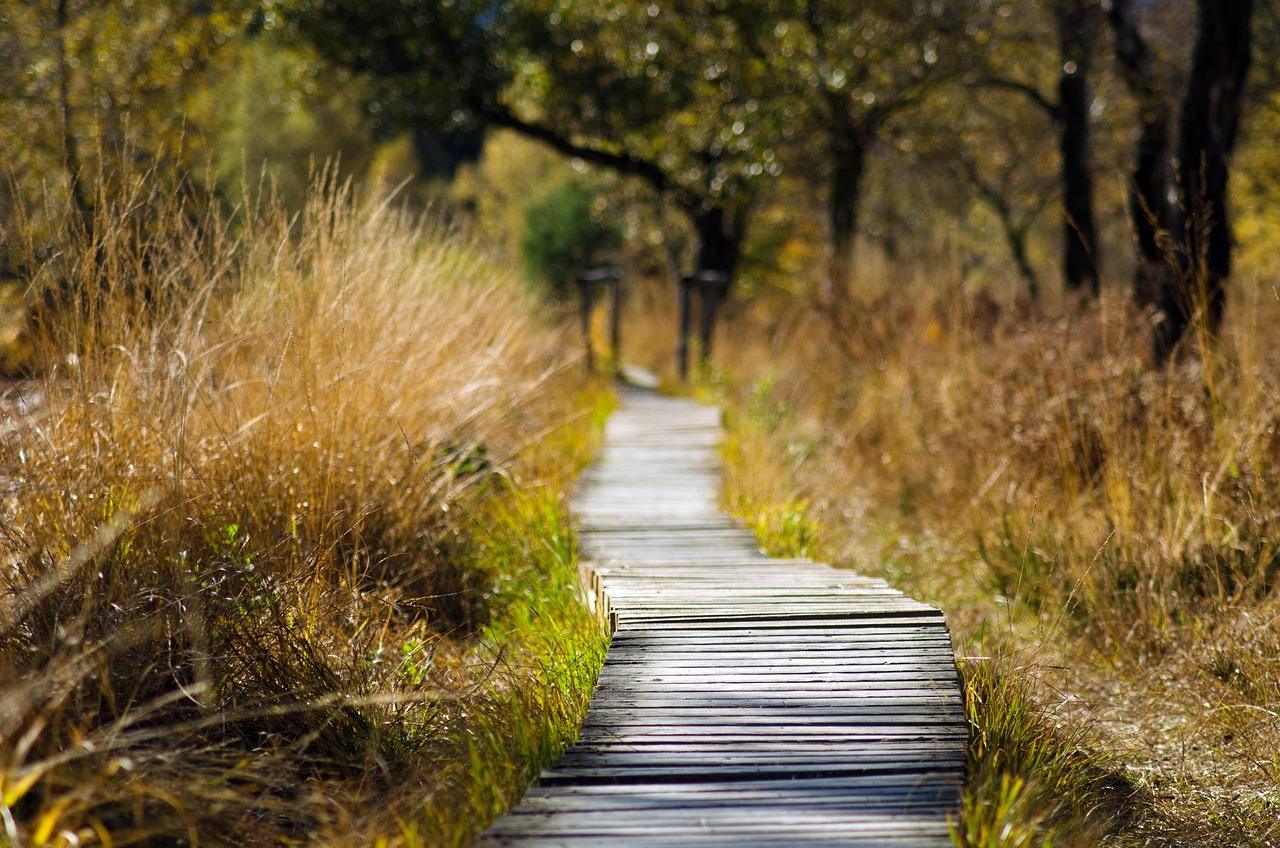
Boardwalks make Yellowstone friendlier than its reputation. Islands describes the half-mile Fountain Paint Pot loop as entirely boardwalk, and the Midway Geyser Basin trail, with views of Grand Prismatic Spring, as less than a mile and mostly boardwalk. For a longer outing on flat gravel, Fairy Falls runs over 4 miles.
Bryce Canyon, Utah
The rim walk from Sunset Point to Sunrise Point is listed at 1.1 miles with an 82-foot gain in the Deseret News roundup. A National Trust for Historic Preservation guide instead lists a 1-mile paved section with a 200-foot gain. The gap shows why you should check the park’s own trail information on the day.
Quieter and shorter options
Famous parks are not the only choice. These trails suit beginners and often come with fewer crowds:
- Great Basin, Nevada: the 2.7-mile Alpine Lakes Loop is popular, yet Great Basin is one of the least-visited parks in the system.
- Saguaro, Arizona: the 1.4-mile paved Mica View Trail has a 49-foot gain and is both wheelchair and stroller accessible.
- Great Sand Dunes, Colorado: the Montville Nature Trail is a quick, half-mile, shady forested walk.
- Great Smoky Mountains: the nearly 4-mile Gatlinburg Trail gains around 200 feet, according to Islands.
Trails to save for later
Some famous walks are a bigger commitment than they look. At Pinnacles in California, the Condor Gulch Overlook Trail is rated moderate, with a 550-foot gain over a 2-mile round trip, according to Western National Parks.
At Kenai Fjords in Alaska, the eight-hour guided Exit Glacier excursions are not for the new hiker. The easier alternative is a paved 2.2-mile loop at the glacier’s base, as the National Trust guide describes.
Simple preparation that matters more than fitness
A short trail can still go wrong if you arrive at the wrong time or without the basics. Work through these steps:
- Arrive early, then stop at the visitor center to check trail conditions or timed entry reservations.
- Download maps before you enter the park, because service can drop fast in valleys and canyons.
- Carry water: for short hikes under two miles, one guide suggests at least one bottle per person, and more if it is hot or dry.
- Bring traction when it is icy, since even paved paths can be slick.
To build up, REI’s training advice as relayed by Deseret News is to increase leg and core strength, build endurance, improve balance and do cardio. Then move toward moderate hikes with longer distances or more elevation as you get comfortable.
When you have picked a park, read how to plan a national park trip for the next steps. Families with children can pair a short walk with the junior ranger program to give the day a goal.
Frequently asked questions
What is the easiest national park hike for a first-timer?
Show answer
Of the trails listed here, Mather Point at the Grand Canyon is the shortest and flattest: 0.6 miles with a 13-foot gain, per the Deseret News roundup.
Do I need hiking boots for beginner trails?
Show answer
Not always. For paved or boardwalk trails, supportive sneakers can work, as long as the tread is decent.
Are any of these trails accessible for wheelchairs or strollers?
Show answer
The Deseret News listing marks Mather Point, Yavapai Point and Lower Yosemite Falls as accessible for wheelchairs. Check surface and conditions with the park before you go.
How do I move on to harder hikes?
Show answer
Start with short, easy walks, then try longer distances or more elevation by moving toward moderate hikes, as the Deseret News roundup suggests.